5 Risks Every Crypto Holder Should Weigh Before the Next Bull Run
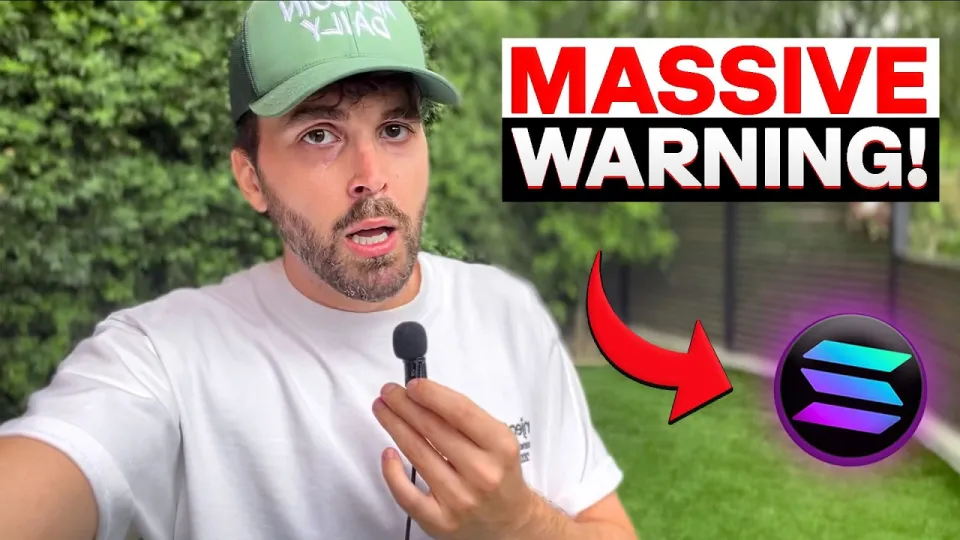
Video: My MASSIVE Warning To Crypto Holders
Need articles like this for your video? They help promote it on YouTube and Google — order them in the Telegram bot @sat_sit_bot. The bot writes and publishes the articles itself (with your YouTube video embedded) on popular topical websites (no ads). Try it free: 50 articles on us.
· based on the channel Altcoin Daily
Crypto holders face five main risks worth tracking: regulation, platform and custody exposure, token dilution, macro shocks, and the opposite risk of staying out of the market altogether. None of these can be eliminated, but each can be sized, hedged or diversified, which is the practical takeaway from Altcoin Daily's warning video. The host's core argument is that the danger for holders is rarely a single crash — it is the slow accumulation of exposure to things you do not control. If you are registering on a new venue while reviewing that exposure, the Weex welcome bonus page is where the deposit offer and its conditions are listed.
Why regulation is the number one structural risk for crypto
Regulation is the risk that changes the rules of the game rather than the price of a coin. When a jurisdiction decides how tokens are classified, which exchanges may serve residents, or how staking and lending products are treated, the effect is not a drawdown you can wait out — it is a change in what you are legally allowed to hold or use. The video frames this as the reason holders should stop treating every token as equally durable: assets with clear legal standing and deep liquidity behave very differently from assets that depend on a permissive environment. Practical responses include keeping a written record of where each position is held, checking whether your venue serves your country of residence, and avoiding products whose yield depends on a legal interpretation that could flip.
Platform and custody risk: who actually holds your keys
Custody risk is the chance that the platform holding your coins fails, freezes withdrawals, or changes its terms before you can react. Brokerages and exchanges are convenient, but the balance you see is a claim on a company, not a coin in your pocket. The video is blunt about this: the moment withdrawals pause, your strategy stops mattering. A workable rule is to keep only working capital on any venue and move the rest to self-custody, testing the withdrawal path with a small amount first. If a platform offers unusually high yield on a stablecoin or lending product, treat the extra return as payment for taking on exactly this risk.
Dilution, unlocks and the supply side of your portfolio
Dilution is the risk that the token you own becomes a smaller share of a larger supply. Vesting schedules, team unlocks, inflation rewards and treasury sales all increase circulating supply, and price has to absorb that flow before holders see gains. The video's warning applies directly here: a project can execute perfectly and still leave holders flat if emissions outpace demand. Before adding a position, check the unlock calendar for the next two quarters, the share of supply still locked, and whether staking rewards are paid in the same token. Coins with fixed or slow-growing supply behave differently from those with aggressive emission schedules, and mixing the two without knowing which is which is how portfolios quietly underperform.
Macro shocks and the risks holders cannot control
Macro risk is the chance that something outside crypto — war, an energy shortage, a credit event, a sudden change in interest-rate expectations — drains liquidity from every risk asset at once. Crypto trades around the clock and often leads moves in both directions, so a holder can be stopped out while asleep. The video's framing is that these events are not rare anomalies but recurring features of the market. The realistic response is not prediction but sizing: decide in advance how much of the portfolio you would be willing to see fall 50% without changing your plan, keep some dry powder, and avoid leverage that forces a sale at the worst moment.
The opposite risk: staying out of crypto entirely
Not owning crypto is itself a position with its own cost. Every holder who sat out previous cycles knows the specific pain of watching an asset class re-rate without them, and the video's audience makes the same point repeatedly: the larger regret is usually missing the exposure, not enduring a drawdown. This does not argue for buying everything at any price. It argues for treating crypto as a deliberate allocation with a stated target weight, reviewed on a schedule, rather than an all-or-nothing bet. A holder who owns a modest, well-custodied position and rebalances is expressing a view without betting the household balance sheet on a single token.
Questions holders keep asking about platforms and tokens
The most common doubts in the comments are practical rather than theoretical. Should you avoid mainstream brokerages? What about a specific DeFi token — is the warning about the protocol or the token? And when is the next cycle? The video's answer is consistent: the venue matters less than whether you can withdraw, and the token matters less than whether you understand its supply and legal status. On timing, the host pushes back on date predictions, noting that long-time observers have watched many promised cycles arrive late. Treat any specific year as a scenario, not a schedule.
The two bonus links mentioned in the video
Both links below are the promotional offers referenced in the video. They are registration bonuses, not investment advice — read the terms, including any trading-volume requirements, before depositing.
Summary
The warning worth taking from Altcoin Daily is that crypto risk is mostly structural: regulation, custody, dilution and macro shocks decide outcomes more often than chart patterns do. Holders who map those four exposures, size positions so a 50% drawdown is survivable, and keep the majority of coins in self-custody are already ahead of most of the market. The fifth risk — staying out — is handled by choosing a deliberate allocation instead of an all-or-nothing bet. If you are opening a new account while you review your setup, the Weex deposit bonus page lists the current offer and its requirements.
Key takeaways
- The biggest structural risk for holders is regulation: rules can reshape which tokens, platforms and products remain accessible.
- Custody risk is real: leaving coins on an exchange or brokerage means trusting a third party with your keys and your exit.
- Token dilution and unlocks can cap upside even when the market trend is bullish.
- Macro shocks such as war and energy shortages hit crypto liquidity faster than fundamentals.
- The opposite risk is staying out entirely and missing the asset class, which many holders consider the larger cost.
Questions & answers
Should I avoid mainstream brokerages like Robinhood for crypto?
The issue is not the brand but the custody model. On a brokerage you hold a claim on the company, so you depend on its withdrawal rules, its asset listings and its terms of service. Keeping a small working balance there is fine; keeping your long-term holdings there concentrates platform risk that self-custody removes.
Is the warning about a DeFi protocol like Aave or about its token?
They are different exposures. A lending protocol can keep functioning while its governance token falls sharply, because token price and protocol usage are not the same thing. Decide whether you want usage exposure, token exposure or both, and check the token's supply schedule before buying.
Which coins are least affected by regulation?
Assets with the deepest liquidity, the longest track record and the clearest legal treatment tend to be more resilient: Bitcoin and Ethereum are the standard examples. Newer or privacy-focused tokens carry more regulatory uncertainty. Diversifying across a few well-understood assets is more useful than picking one winner.
When will the next major crypto bull run start?
Nobody knows, and the video deliberately avoids naming a date. Long-time holders have watched many predicted cycles arrive late, so treat any specific year as a scenario rather than a schedule. Size your position so you can hold through a long flat period without being forced to sell.
Source: My MASSIVE Warning To Crypto Holders · Markdown version